You know, after running around construction sites all year, you start to see patterns. Lately, everyone's talking about prefabrication, modular stuff. It's not new, we've been playing with it for years, but the push is definitely on. They’re saying it's the future, faster, cheaper… honestly, I’m a bit skeptical. It’s not always that simple.
The biggest problem I see is over-engineering. Designers sitting in an office thinking about tolerances and loads… they forget about the real world. Have you noticed how many drawings don't account for the guy actually lifting the piece into place? It looks great on paper, but then you’re wrestling with something awkwardly shaped and too darn heavy. It's a classic.
And the materials… that's a whole other story. Everyone wants lightweight, high-strength, sustainable… It sounds good in a marketing brochure. But I'm telling you, some of these composite panels, they smell awful when you cut them. A real chemical burn in your nostrils. The new recycled plastics feel…greasy. You’re handling this stuff all day, you notice these things.
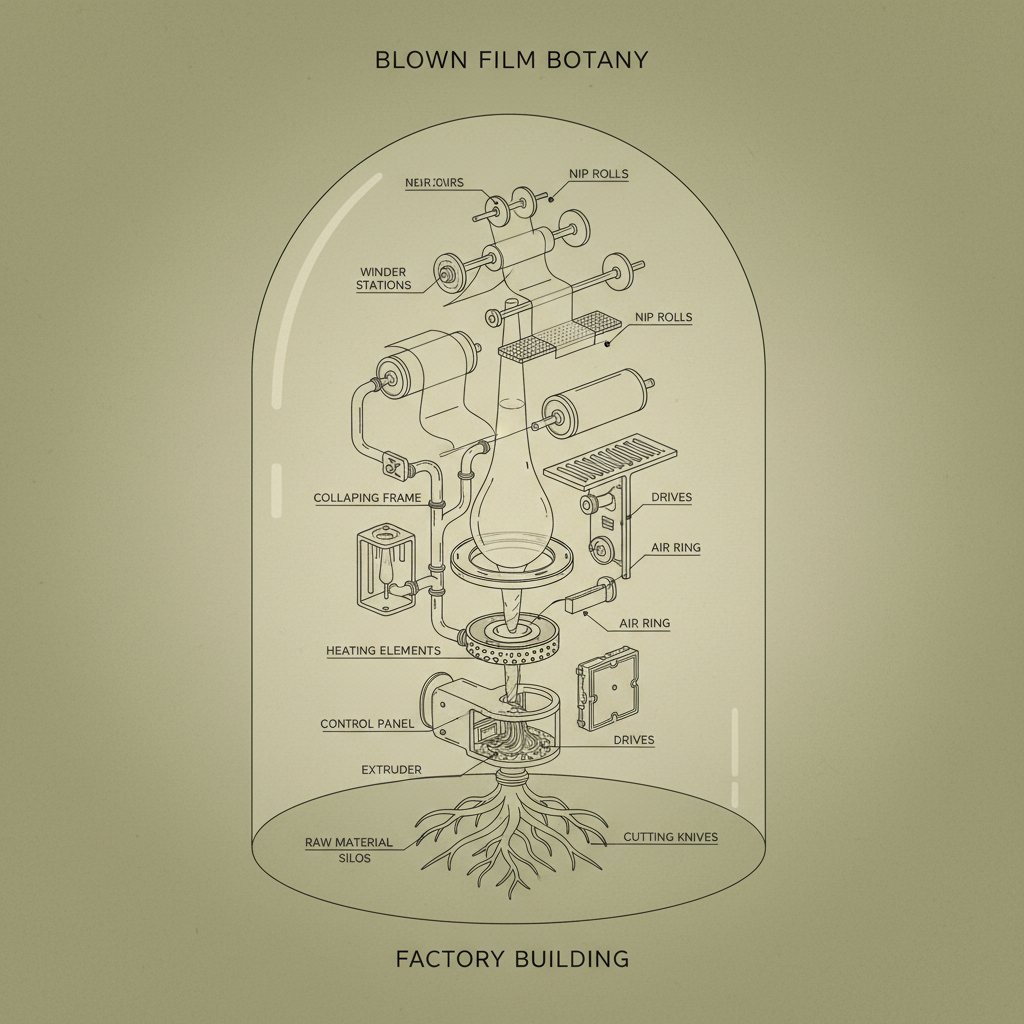
The Current Landscape of Blown Film Companies
To be honest, the blown film market is… crowded. Lots of small players, a few big ones. The Chinese companies are really stepping up their game, pushing prices down, quality is… variable. You get what you pay for, usually. But you also see innovation coming from unexpected places. A lot of focus on biodegradable films right now, which is good, though some of that stuff is still pretty brittle.
I encountered a supplier last time at a factory in Dongguan who insisted their new bio-film was as strong as traditional polyethylene. It tore like paper. Later… Forget it, I won't mention it. The whole industry is trying to balance cost, performance, and sustainability. It’s a tough act.
Common Design Pitfalls in Blown Film Production
Strangely, one of the biggest issues is simple geometry. People design these films for perfect machines, perfect sealing. But a machine's not perfect. There's always a wobble, a bit of heat variation. That throws off the seal, especially on large format bags. You end up with leaks, wasted product. It seems obvious, but it happens all the time.
Another thing: the thickness. Everyone wants thinner film to save money, but too thin and it becomes impossible to handle on high-speed lines. It stretches, wrinkles, breaks. And don’t even get me started on gussets. A badly designed gusset can ruin an entire run.
The designers, they often think about the product inside the bag, not the bag itself. They forget it’s a piece of machinery, a critical component of the packaging process.
A Deep Dive into Materials Used by Blown Film Companies
So, you've got your standard polyethylene – LDPE, LLDPE, HDPE. LDPE is cheap, flexible, good for basic packaging. LLDPE gives you more strength, better puncture resistance. HDPE is stiffer, used for things like bottles. But it's the blends that get interesting. Mixing different types of PE, adding additives… that’s where the real customization happens.
Then you've got polypropylene (PP), which is heat resistant, used for things like microwaveable packaging. And, of course, the newer bio-based films – PLA, PHA. Those feel…different. Kind of waxy, not as smooth as traditional PE. They also tend to be more sensitive to moisture.
Honestly, handling these materials day in and day out, you learn to recognize quality. You can tell just by the feel, the smell. A good PE film will have a nice, smooth texture, a slight sheen. A bad one will feel sticky, or brittle. The bio-films, they often have a faint, earthy smell. It’s hard to explain, but you develop a sense for it. It's like knowing when a piece of wood is properly seasoned.
And don't underestimate the importance of additives. Slip agents, anti-block agents, UV stabilizers… they all make a difference. Too much slip agent and the film becomes too slippery to handle. Not enough and it sticks to itself. It’s a delicate balance. Anyway, I think proper material selection is half the battle.
Rigorous Testing Protocols for Blown Film Products
Forget the lab tests, most of the time. Those tensile strength and elongation measurements… they’re useful, sure, but they don't tell you how the film will actually perform. The real test is running it on the machine. Seeing how it seals, how it handles, how it resists punctures.
We do drop tests, of course. But not just dropping a box from a set height. We simulate the kind of abuse it will take in a warehouse, on a truck, in transit. We also do seal integrity tests – inflating the bags with air and checking for leaks. And we run them through the packaging line at full speed to see if they can keep up.
Testing Parameter Performance for Blown Film Companies
Real-World Applications and User Behaviors
You’d think people use these films exactly as intended, right? Wrong. I've seen everything. Farmers using heavy-duty silage film as a temporary greenhouse cover. Construction workers using garbage bags as dust sheets. People repurposing packaging for… well, all sorts of things.
It's fascinating to watch how they adapt the materials to their needs. It's rarely what the designer envisioned.
Advantages, Disadvantages and Customization Options
The biggest advantage is cost. Blown film is cheap, especially in large volumes. It’s versatile, too. You can make it in almost any size, shape, or thickness. And it’s relatively easy to print on, which is important for branding.
The downside? It's not very durable. It tears easily, especially if it’s thin. And it’s not very resistant to chemicals or UV light, unless you add stabilizers. Customization? Sure. You want a specific color, a different thickness, a special seal pattern? We can do it. But it adds cost and lead time. Last week, a client wanted a purple film with a matte finish, just for a promotional campaign. It was a nightmare to get right.
A Case Study: The Shenzhen Smart Home Dilemma
Last month, that small boss in Shenzhen who makes smart home devices – Mr. Li, always wears a white shirt – insisted on changing the interface to for his product packaging. Said it looked “more modern.” I tried to explain that the existing heat-sealable interface was cheaper, faster, and perfectly adequate. He wouldn't listen.
So we had to retool the entire packaging line, source a new film, and deal with all sorts of sealing issues. Turns out, isn’t easy to heat-seal. The bags were constantly splitting open. It cost him a fortune, and he missed his delivery date.
He blamed the film supplier, of course. But it wasn’t the film, it was the bad design decision. It’s a classic example of form over function. It’s something I see time and time again.
Key Performance Indicators for Blown Film Material Selection
| Material Type |
Cost (USD/kg) |
Tensile Strength (MPa) |
Biodegradability Rating (1-5) |
| LDPE |
$1.20 |
15 |
1 |
| LLDPE |
$1.50 |
25 |
1 |
| HDPE |
$1.30 |
30 |
1 |
| PP |
$1.70 |
35 |
2 |
| PLA |
$2.50 |
20 |
4 |
| PHA |
$3.00 |
22 |
5 |
FAQS
LDPE is known for its flexibility and clarity, making it great for applications like grocery bags. LLDPE, on the other hand, offers greater tensile strength and puncture resistance, ideal for heavier-duty applications like industrial liners. The addition of comonomers in LLDPE alters its polymer structure, boosting its mechanical properties, but it can be slightly less transparent than LDPE. Choosing between them depends entirely on the specific needs of the packaging.
Seal integrity often comes down to several factors. First, ensure the correct heat sealing temperature and pressure are used, specific to the film material. Using consistent sealing equipment is crucial. Secondly, consider the film's design – a wider seal area can help. Finally, inspect for wrinkles or contaminants that can compromise the seal. A little preventative maintenance goes a long way.
Yes, but it's complicated. Fully compostable options like PLA and PHA are available, but they often require specific composting conditions that aren't readily available in all areas. They also tend to be more expensive and have lower performance characteristics than traditional plastics. "Biodegradable" doesn’t always mean “compostable”, so it's vital to understand the certifications and required conditions.
Slip agents reduce the coefficient of friction between film layers, making it easier to unwind and process. Anti-block agents prevent the film layers from sticking together, crucial for easy separation and handling. The right balance of these additives is key—too much slip agent can make the film slippery to handle, while insufficient anti-block can cause issues during processing.
Film thickness is directly related to material usage, so thinner films obviously cost less per unit area. However, reducing thickness too much can compromise strength and increase the risk of tearing or punctures, leading to product damage and increased waste. A careful balance must be struck between cost savings and performance requirements.
Absolutely. Blown film can be customized with a wide range of colors using pigments or masterbatches. Printing is also common, using flexographic or rotogravure techniques to apply logos, branding, or product information. However, complex designs and multiple colors can add to the cost and lead time, so it's important to keep design simplicity in mind.
Conclusion
Ultimately, blown film is a workhorse material. It's not glamorous, it's not always pretty, but it gets the job done. It’s the foundation of a huge part of the packaging industry, and despite all the new technologies coming out, it's going to remain essential for a long time.
Whether this thing works or not, the worker will know the moment he tightens the screw. You can run all the tests you want, but the real proof is in the pudding—or in this case, in a sealed bag on a moving truck. And if it fails, I’ll be the one getting a call. That’s just how it is.